
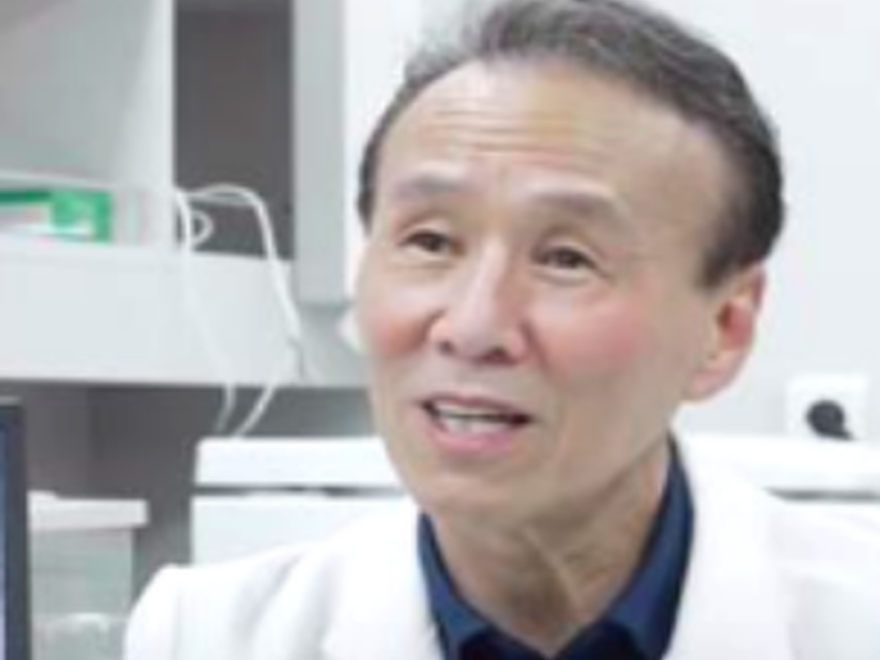
Dr. Churl-Ki Min · CTO, Research Institute
Dr. Min holds a Ph.D. in pharmacology from Cornell University and served as a professor in the Department of Life Sciences at Ajou University for approximately 29 years. Spanning genetic engineering, protein engineering and bioinformatics, he has focused on stem cell-based treatment of intractable diseases, and currently serves as CTO of the OCELLBIO research institute.
- B.S. and M.S., Seoul National University; Ph.D. in Pharmacology, Cornell University (1991)
- Postdoctoral researcher, Caltech, USA (1991–1993)
- Professor, Department of Life Sciences, Ajou University, approx. 29 years
- Fields: genetic engineering, protein engineering, bioinformatics
- Holder of multiple patents including RGMc-based stem cell induction media

Dr. Haegwon Kim · Research Advisor
Dr. Kim earned a Ph.D. in Zoology from Seoul National University and conducted postdoctoral research at the UK Medical Research Council (MRC) and Johns Hopkins University in the United States. He served as a professor in the Department of Life and Environmental Sciences and as Dean of the College of Natural Sciences at Seoul Women's University, and currently serves as an advisor to OCELLBIO's research institute.
- B.S., M.S. and Ph.D. in Zoology, Seoul National University
- Postdoctoral research at the UK MRC and Johns Hopkins University
- Former Dean, College of Natural Sciences, Seoul Women's University
- President, Korean Society for Reproductive Medicine
- Editorial board member, World Journal of Stem Cells (2009–2013)
- Fields: cell therapeutics and stem cell differentiation
A convergence-driven research philosophy
The team's patent portfolio is the product of long-standing academic rigor combined with cutting-edge convergence technologies such as protein engineering and bioinformatics.
- Mitochondria and telomere protection: suppressing cellular aging and maximizing energy metabolism
- Proprietary induction medium (RGMc): high-efficacy stem cell induction technology
- RNA/PNA delivery systems: next-generation nucleic acid platform technology
- Neurology: differentiation technologies applied to Parkinson's and Alzheimer's disease
- Metabolism: induction of insulin-secreting cells for diabetes treatment
Patent portfolio
The research team holds nine registered and published patents in Korea and abroad, centered on stem cell induction media, adult stem cell differentiation induction, and nucleic acid-based therapeutic compositions.
- Medium composition containing RGMc for stem cell induction, and induction method — Published KR 10-2015-0009682 (Min)
- Composition for treating or preventing endometrial cancer and method of use — Registered US 7,381,819 B2 (Min)
- Composition containing small hairpin RNA molecules for treating and preventing endometrial cancer — Published KR 10-2006-0119155 (Min)
- PNA variant compounds with antibacterial activity and disinfectant compositions — Published KR 10-2008-0011933 (Min)
- Method for inducing differentiation of adult stem cells into insulin-secreting cells — Published KR 10-2010-0045281 (Kim)
- Induction of differentiation of adult stem cells into insulin-secreting cells — Registered KR 10-0895324 (Kim)
- Method and medium for differentiating neural progenitor cells into dopaminergic neurons — Registered KR 10-0683198 (Kim)
- Method and medium for differentiating neural progenitor cells into cholinergic neurons — Registered KR 10-0683199 (Kim)
- Method and culture medium for hepatocyte differentiation using adult stem cells — Published KR 10-2008-0095467 (Kim)
This website is intended to introduce OCELLBIO's business. OCELLBIO Inc. was incorporated in August 2026 and is currently building out its headquarters facility; the facility and equipment specifications shown are design-stage figures and will be finalized during construction and verification. Culture, quality testing and batch release of clinical-grade cells are performed by manufacturing facilities licensed under the applicable regulations, while OCELLBIO is responsible for the storage, logistics and quality documentation of cells handled in sealed condition. Specific terms of cooperation are provided on request.